Lawn Rake Tractor: Your Sustainable Farming Secret Weapon
Sustainable agriculture is no longer a trend; it's a necessity. Efficient organic matter management is key, and a lawn rake tractor offers a surprisingly effective solution. This isn't just about tidying up; it's about optimizing your farm's sustainability and boosting yields. This guide explores how a lawn rake tractor can significantly improve your organic matter management, saving time, energy, and resources. For alternative bale handling, see this helpful guide.
Why a Lawn Rake Tractor for Sustainable Farming?
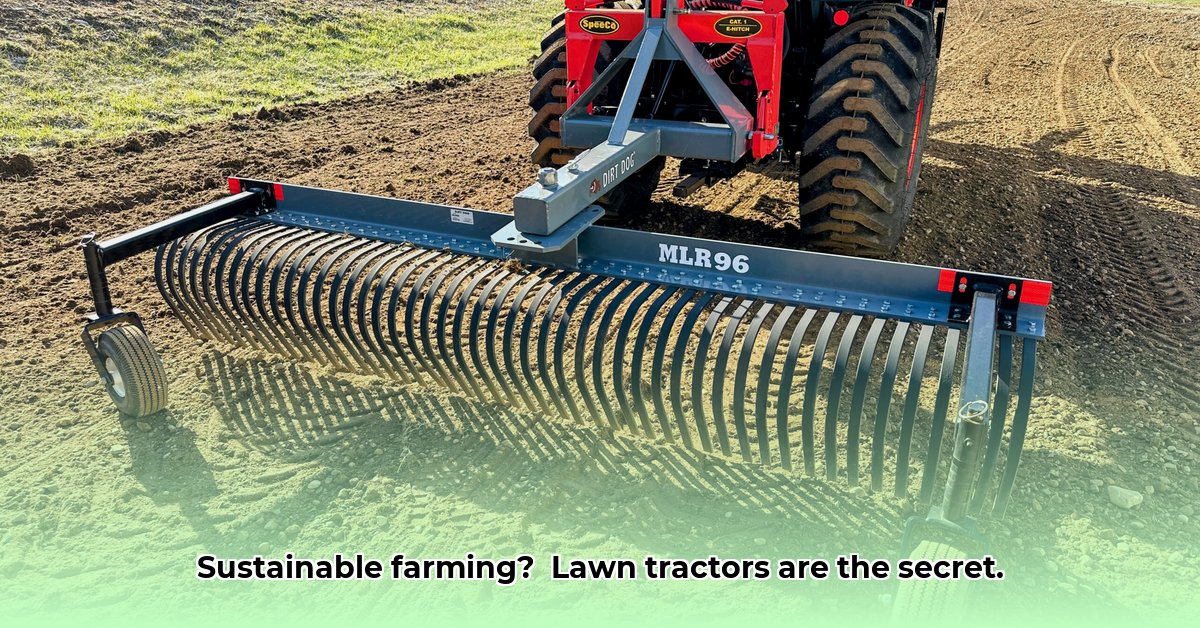
A lawn rake tractor is more than a simple machine; it's a system for efficiently managing organic materials. It tackles several key challenges simultaneously: efficient collection of valuable compostable materials, soil preparation for optimal planting, and reduced fuel consumption compared to manual or other power equipment methods. Isn't this a more efficient way to work?
Super-Efficient Organic Matter Collection
Manual leaf and grass clipping collection is time-consuming and labor-intensive. A lawn rake tractor swiftly gathers substantial quantities of organic matter, significantly reducing labor and time. This collected material forms the foundation of a rich compost, minimizing your reliance on synthetic fertilizers and enriching your soil naturally. How much time do you currently spend on this task?
Happy Soil, Happy Plants: Soil Prep and Nutrient Cycling
Beyond collection, a lawn rake tractor efficiently prepares soil for planting. Its action loosens compacted soil, improving aeration and drainage. This leads to healthier plants and increased resilience to pests and diseases, reducing the need for chemical interventions. Isn't improved soil health the cornerstone of successful sustainable farming?
Fuel Efficiency: A Greener, More Economical Approach
Compared to manual methods or larger machinery, a lawn rake tractor often demonstrates superior fuel efficiency. This translates to lower operating costs and a smaller carbon footprint, aligning perfectly with sustainable farming principles. How much could you save on fuel costs annually?
Getting Started: Implementing Your Lawn Rake Tractor
Follow these steps to successfully integrate a lawn rake tractor into your sustainable farming practices:
Choosing the Right Model: Select a model suited to your land size and the types of organic materials you'll be handling. Consider factors like engine power, collection capacity, and maneuverability. Researching different models is crucial for making an informed decision.
Setup and Maintenance: Regular maintenance is essential for longevity and optimal performance. Consult your owner's manual for specific instructions on cleaning, lubrication, and other crucial maintenance tasks. Proper maintenance guarantees years of reliable service.
Safety First: Always prioritize safety. Read and understand all safety instructions before operation. Wear appropriate protective gear, such as safety glasses and gloves.
Mastering the Raking Technique: Experiment to determine the optimal raking technique for various organic materials and soil conditions. Practice makes perfect.
Composting Best Practices: Learn effective composting methods to maximize the nutrient content of your collected organic matter. Proper composting ensures you're getting the most out of your efforts.
Weighing the Pros and Cons: Is a Lawn Rake Tractor Right for You?
Before investing, carefully weigh the advantages and disadvantages:
| Pros | Cons |
|---|---|
| Efficient organic matter collection | Higher initial investment |
| Reduced fuel consumption & operational costs | Requires storage space |
| Improved soil health and aeration | Might require some mechanical aptitude |
| Significant time and labor savings | Can be noisy during operation |
| Reduced dependence on chemical fertilizers | Maneuvering might be challenging in tight spaces |
| Environmentally friendly | Depending on the model, higher maintenance might be required |
Conclusion: Investing in a Sustainable Future
A lawn rake tractor, while seemingly simple, represents a powerful tool for achieving sustainable agriculture. It offers a cost-effective, efficient, and environmentally friendly approach to organic matter management, improving soil health and minimizing environmental impact. By integrating it strategically, you are investing in the longevity and prosperity of your farm. Ready to take the next step towards a more sustainable farming operation?